


Diamond Plate Edge Straightener & Bending Tongs | Fairmont | 3" Jaw
Diamond Plate Edge Straightener & Bending Tongs | Fairmont | 3" Jaw
Couldn't load pickup availability


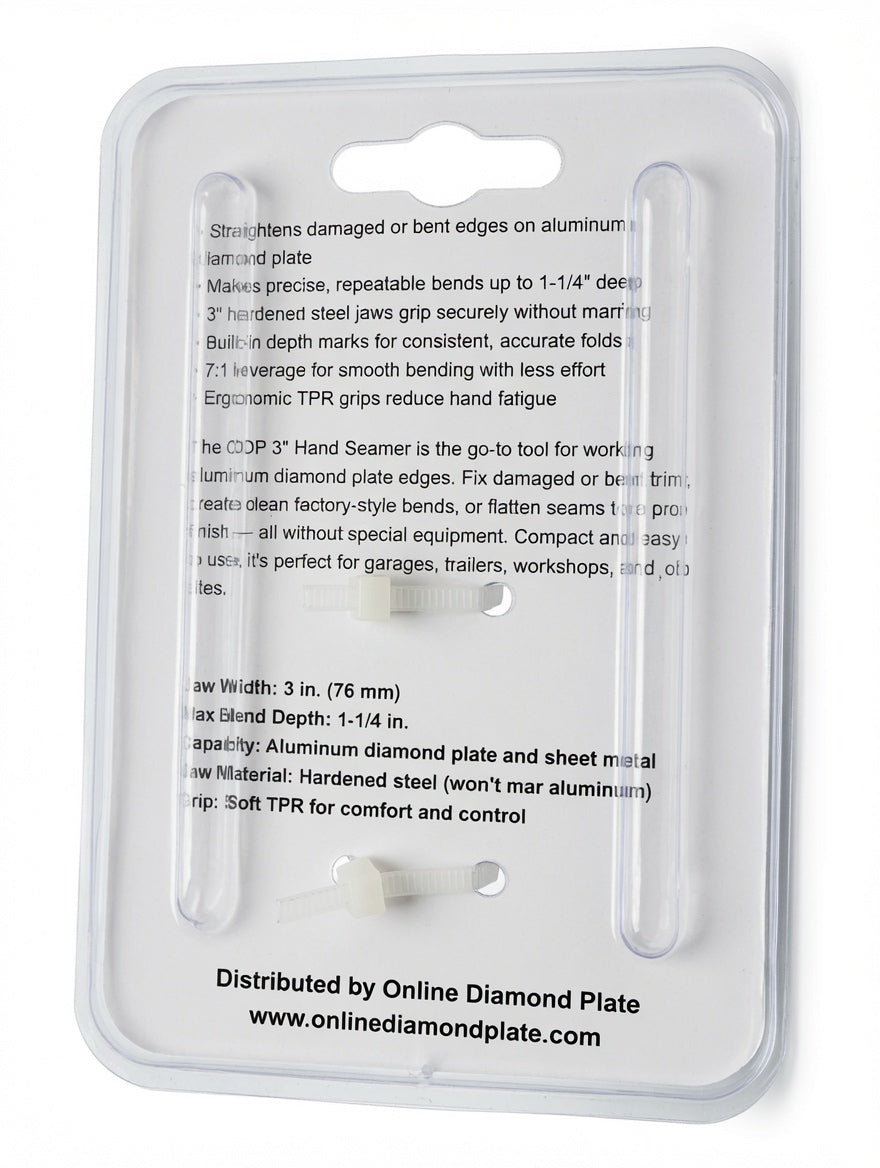
- About This Item
- Product Data Sheet
Bend It. Straighten It. Get It Perfect.
Custom diamond plate installations rarely go perfectly to plan. Panels need to wrap around a return edge. A corner needs a custom fold. A panel gets bent during handling on the job site and needs to be worked back flat before installation. The Fairmont Diamond Plate Edge Straightener and Bending Tongs are the purpose-built hand tool for all of these situations — forged, plated, and designed specifically for gripping and bending sheet metal including aluminum diamond plate panels up to .045" thick.
No brake press. No fabrication shop. No replacement order. Just a pair of tongs, a strip of cardboard, and a few minutes of careful hand work.
Two Jobs. One Tool.
Bending for Custom Installations
When your project calls for a return edge, a folded lip, or a custom panel bend that cannot be made with a shear, these tongs give you the control to make precise, repeatable bends by hand. The depth marks engraved on the jaws let you position the panel consistently at the exact bend point on every pass — critical when you are making the same bend across multiple panels or working toward a specific angle in stages.
Straightening Bent or Damaged Panels
Diamond plate aluminum panels can get bent during job site handling, storage, or cutting. A panel with a slightly bent edge or a small crease does not always need to be replaced — worked carefully with these tongs and a protective cardboard layer, minor bends can often be straightened sufficiently for a clean installation. Work gradually and check your progress frequently — overshoot in the other direction and you have traded one bend for another.
The Cardboard Trick — Do Not Skip This Step
The diamond plate surface scratches easily when gripped directly by metal jaws. Before placing the tongs on any panel surface, tear a strip of cardboard and place it between the tong jaws and the diamond plate on both sides of the jaw. The cardboard acts as a protective buffer — it lets you apply significant hand pressure through the tongs without the metal jaws contacting and scratching the polished aluminum finish.
This is the single most important technique tip for using these tongs on finished diamond plate. Skip the cardboard and you will leave jaw marks on the panel face. Use the cardboard and you can apply real pressure without visible damage to the finish.
Working Around the Diamond Knobs
Aluminum diamond plate is not a flat surface — the raised diamond knobs create high points across the panel face that affect how the tong jaws grip and where pressure is concentrated. When positioning the tongs, be aware of where the knobs fall under the jaw. You may need to shift the jaw position slightly or work in multiple shorter gripping positions along the bend line rather than one long single grip to achieve a consistent result across the full width of the bend. Take your time, work in passes, and check the panel frequently as you go.
How to Use These Tongs
- Protect the surface first. Tear a strip of cardboard wide enough to cover the full jaw width and place it on both sides of the panel edge where the tongs will grip.
- Use the depth marks. The jaws have engraved depth marks to help you position the panel at the correct distance from the jaw edge for your intended bend. Set your panel to the depth mark before squeezing.
- Grip firmly and apply pressure. With the cardboard in place, grip the handles and apply firm, even hand pressure. The tongs can handle significant pressure without damaging the panel surface when the cardboard buffer is in place.
- Work in passes for larger bends. For bends greater than a few degrees, work gradually — make a partial bend, check the angle, reposition if needed, and continue. Trying to achieve a sharp bend in a single aggressive pass risks cracking or creasing the aluminum.
- Work around the knobs. If the knobs prevent a clean consistent grip, shift the jaw position slightly or work in multiple shorter gripping positions along the bend line.
- Check frequently. For straightening work especially, check your progress after every pass. It is easy to overshoot — work deliberately and stop as soon as the panel is flat.
Compatible Panel Thicknesses
| .025" embossed aluminum diamond plate | ✅ Works well |
| .032" embossed aluminum diamond plate | ✅ Works well |
| .045" heavy duty aluminum diamond plate | ✅ Works well |
| .063" heavy duty aluminum diamond plate | ⚠️ Not tested — heavier gauge may exceed hand tool capacity |
| .125" heavy duty aluminum diamond plate | ❌ Not recommended — structural gauge requires mechanical forming equipment |
Tool Specifications
| Manufacturer | Fairmont |
| Model | T14030 |
| Overall Length | 9.5" |
| Jaw Width | 3" |
| Construction | Forged and plated steel jaws |
| Handles | Cushion grip — soft, comfortable, non-slip |
| Jaw Feature | Bending depth marks engraved on jaws for consistent repeatable bends |
| Compatible Thickness | .025" through .045" aluminum diamond plate |
| Recommended Accessory | Cardboard strip as jaw protector — prevents scratching polished finish |
Complete Your Diamond Plate Installation
- .025" Embossed Aluminum Diamond Plate Sheets — Our best-selling sheet — cuts effortlessly with this shear
- .045" Heavy Duty Aluminum Diamond Plate Sheets — The thickest gauge this shear handles cleanly
- Aluminum Trim Moldings — H-Seam, J-Trim, Inside and Outside Corner profiles
- Diamond Plate Corner Guards — Inside and outside corner protection
- Diamond Plate Screws — DeWalt Wall-Dog anchors for securing panels to drywall, wood, and metal studs
- 3M 550 Construction Adhesive — For a completely fastener-free panel installation
Bend it right. Straighten it out. Install it clean.
| Weight | 1.96 lbs |
| Dimensions | 9.5 × 4 × 3 in |